Reading time: about 8 minutes
AI in defence logistics is no longer a promise: predictive maintenance of fleets, forecasting demand for parts, fuel and ammunition, inventory management and anticipating transport bottlenecks all work in practice. The catch is that the same data that makes AI useful, the patterns of consumption, maintenance and readiness, is also a strategic asset: it reveals operational capability. So for a supplier in the defence supply chain the question is not "whether to use AI in logistics", it is "where that data runs". The answer that both practice and the F-35 lesson point to is one: in an environment you control, not in a public cloud belonging to someone else's vendor. Below we lay out what AI genuinely does in defence logistics and why the location of the data is a strategic decision here, not a technical one.
This is a piece about how the industry approaches the problem, not a manual for handling classified information. We ask for no classified data and describe no specific security architecture. The formal layer, accreditation and classification levels, we set out separately in the piece on the defence supply chain and classified data. Here we look one layer up, at the flow of the logistics data itself.
What AI genuinely does in defence logistics
The use cases are not hypothetical. Lockheed Martin is extending AI-enabled logistics from the F-35 to the F-22, F-16 and C-130 fleets, as the trade outlet defence-industry.eu reports. In practice it comes down to a few recurring functions.
- Predictive maintenance. Deep-learning models analyse operational data, for example vibration, temperature and fuel flow, to predict a component failure tens of hours in advance. That turns unplanned downtime into a scheduled replacement.
- Demand forecasting. Models combine real consumption, equipment operating profiles, environmental conditions and degradation trends to forecast demand for parts and materials before the warehouse runs short.
- Inventory management. Logistics command dashboards show parts health, forecast confidence and replenishment recommendations, and vision systems count and verify stock.
- Transport throughput. AI anticipates bottlenecks in the transport network and helps position stock where it will be needed.
This direction is not specific to one manufacturer. The Atlantic Council report on integrating AI into NATO states plainly that AI can support predictive maintenance of critical stockpiles and forecast demand for ammunition, fuel and spare parts, as well as anticipate transport bottlenecks. For a supplier in the chain this is not a curiosity, it is the direction their customers are moving in.
Why defence logistics data is a strategic asset
This is the point that is easy to miss when you treat logistics as ordinary optimisation. The data feeding these models describes not just parts but capability. A pattern of fuel and ammunition consumption betrays the pace and intensity of operations. Maintenance history maps the real state of a fleet, that is, how much equipment is genuinely ready. A parts forecast reveals plans and bottlenecks. Summed together, this data is a picture of readiness, and readiness is the information an adversary wants most.
This inverts the usual logic that "low-sensitivity data can go to the cloud". In defence logistics even seemingly technical maintenance data, detached from any classification, adds up to a sensitive picture once aggregated. So the decision about where that data is processed is a decision about who gets visibility into your readiness.
The F-35 lesson: what happens when data leaves
The best-known illustration of this risk is the F-35 logistics system. The original ALIS, the Autonomic Logistics Information System, tied maintenance, parts, mission planning and training into one centralised model in which data flowed to infrastructure controlled by the manufacturer and the US program office. As an analysis of F-35 data sovereignty describes, ALIS became a lightning rod precisely because it aggregated high-value operational data and gave visibility into national maintenance patterns and readiness.
The response was the sovereign data gateway concept from 2016, which let partner nations inspect the data and, if needed, block, modify or delay what flowed to the central hub. ALIS's successor, the ODIN system rolled out from 2022, improved the hardware and performance but kept the same centralised sustainment model. The takeaway for a supplier is simple: when the architecture assumes from the outset that data leaves for someone else's hub, regaining control later is an expensive patch rather than the default state. It is far cheaper and safer to design the flow so the data stays with the operator from the start.
Decision table: where to process logistics data
The quickest way to find the direction is to line up the type of logistics data with the reason it is sensitive and where it should be processed.
| Logistics data | Why sensitive | Where to process |
|---|---|---|
| Fuel and ammunition consumption patterns | Betray the pace and intensity of operations | An environment under operator control, not public cloud |
| Maintenance history and forecasts | Map the real state and readiness of a fleet | On-prem or a dedicated, isolated instance |
| Parts and stock forecasts | Reveal plans and bottlenecks | With the operator, with a documented data boundary |
| Supply-chain contract data | Covered by classification or NDAs | Per the accreditation and classification requirement |
| Unclassified, administrative data | Low sensitivity, no window into capability | Cloud is acceptable, isolation adds nothing here |
The pattern is clear: the closer the data is to describing readiness, the more firmly it has to stay under operator control. Public cloud comes back into play only for unclassified data that says nothing about capability.
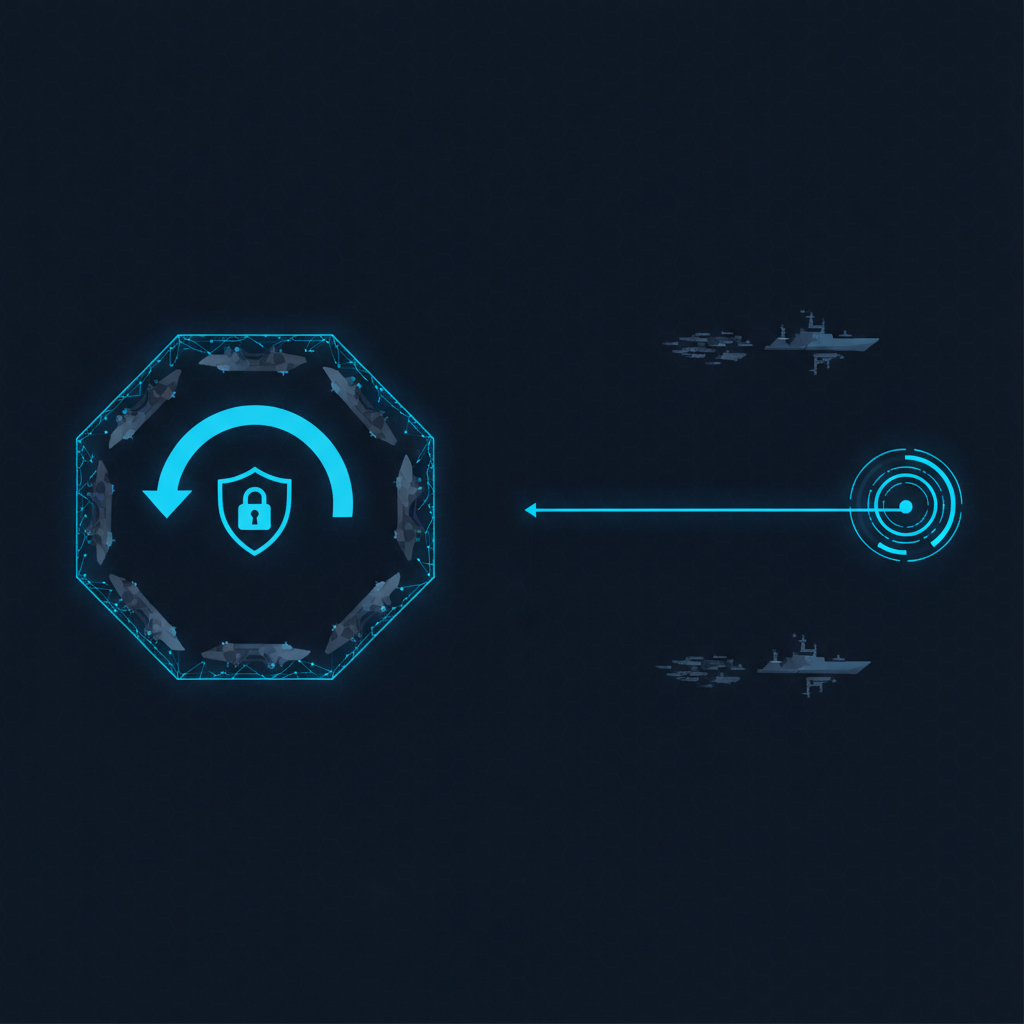 Defence logistics data describes readiness, so it should stay with the operator.
What it means for a defence supply-chain supplier
For a manufacturer or subcontractor in the defence supply chain the conclusion is practical. AI in logistics delivers a real edge, less downtime, smaller safety stock, faster response, but only when you can deploy it without handing readiness data outside. That shifts the default choice from public cloud to local processing or a dedicated, isolated instance, where the data does not leave a controlled environment.
The same argument increasingly comes back from the procurement side. Criteria of control over data and independence from a foreign vendor are entering bid evaluation, which we unpack in the piece on the sovereignty test in procurement, and the wider context of European demand for sovereign AI, including which workloads genuinely need it, we cover around the data on sovereign AI in Europe. Defence logistics is a textbook example of a workload that needs that control.
The formal layer, classification and system accreditation, has to be settled separately and early, because it decides whether the data can enter a given environment at all. We set it out in the piece on classified data in the defence supply chain. When private AI beats public in general is in the piece on private AI for manufacturing.
How to approach it step by step
An order that lets you capture the benefits of AI in logistics without giving up control of readiness data.
- Classify the logistics data. Separate unclassified data from what, once aggregated, describes capability. That is the first column of every later decision.
- Settle the formal layer. Establish whether the data is classified and what accreditation level is required before you pick a tool.
- Choose where it is processed. For data describing readiness, default to on-prem or a dedicated, isolated instance so it does not leave a controlled environment.
- Design the flow, do not patch it later. The F-35 lesson is that regaining control after the fact costs more than planning for it from the start.
- Start with one process. Predictive maintenance or a parts forecast is a good first step, measurable and limited in scope.
If you want to check which of your logistics processes need local processing and which do not, our readiness mini-audit takes 10 minutes and leaves no data behind.
Frequently asked questions
What is AI actually used for in defence logistics?
Predictive maintenance of fleets, forecasting demand for parts, fuel and ammunition, inventory management and anticipating transport bottlenecks. These are use cases already being deployed, not hypotheticals.
Why is defence logistics data so sensitive?
Because once aggregated it describes readiness. Consumption patterns betray operational tempo, maintenance history maps the state of a fleet, and parts forecasts reveal plans. Even unclassified data adds up to a sensitive picture of capability.
Can you use public cloud for defence logistics?
For unclassified, administrative data, yes. For data that describes readiness, by default no, because processing in someone else's environment gives away visibility into capability. For that, local processing or a dedicated, isolated instance is appropriate.
What does the F-35 case teach?
That an architecture routing data to a centralised, external hub by design creates a dependence that is hard and costly to reverse. Sovereign data gateways soften the problem but do not change the centralised model. It is cheaper to design the flow so data stays with the operator.
Where should a deployment start?
With data classification and settling the formal layer, then one limited process such as predictive maintenance. Where data is processed is chosen on the sensitivity of the data, not the convenience of a tool.
Fryderyk, CortexMine. We write about private AI for regulated manufacturers, based on our own deployments and tests.
Prefer to talk it through? Book a 30-minute call with the founder, no pitch, just your case.